Showing posts with label chemist. Show all posts

Combatting Chemophobia Like A Boss

The missing panel talk from Combatting Chemophobia: Speaking science to distrust and engaging with empathy, online, and face-to-face.

The Panel


Chemists should serve the broader public, including better educating people in the nature and uses of chemistry.  This requires communicating with different segments of the public and engaging in different modes of communication.  Whether talking to media or to people online, speaking on behalf of professional organizations like ACS or speaking to our neighbors, our attempts to communicate impact people's understanding of chemistry and of the kind of people chemists are.


Participants in this panel discussion will describe their chemistry outreach experiences, engaging with groups whose opinions on chemistry range from curiosity and misunderstanding to concern and mistrust.  Panelists will describe what has made their own attempts to communicate successful and lessons learned from less successful attempts. We examine a diverse array of outreach efforts to build a repertoire of strategies for engaging with different communities.


Leigh Krietsch Boerner writes about the science of consumer products and works to address chemophobia from product marketing and rampant misinformation on the internet. 

Brandi VanAlphen examines impacts of industry supported messages on the public's understanding of chemistry and of chemists, and discusses how corporations can convey a better understanding of science while addressing the public's distrust of their motives.

Matthew Hartings uses food and cooking to engage large groups of non-scientists with chemistry in the classroom and in public lectures and will discuss how his outreach has been informed by the science of communicating science.

Chad Jones explores audiovisual outreach (podcasts and videos) as a way to make chemistry exciting and accurate.

Raychelle Burks is a blogger and activities coordinator using the intersection of chemistry and pop culture as an outreach tool.

Kevin Shanks is a forensic toxicologist and drug chemist whose activities include community and media outreach through social media and blogging about toxicology, drug laws, and other things forensic.

My Presentation 


Transcript Version
  1. Hi my name is Brandi VanAlphen, but mostly I am known as BranVanChemist through twitter. Today, I am here to talk about chemophobia and its impacts on business and industry. What we hear about a business is what we hear, see or read on mass media. This is relevant because no matter the subject matter, the reality is we all work with or for these industries and we are the workforce, I am from Oklahoma which is the center for oil and gas industry. I sometimes refer to us as district 12 because we supply energy/fuel and lets face it, there isnt much else there.
  2. Here is a headline most of you are familiar with- fracking and earthquakes. There is a lot of debate and discussion, but the reality is that the science experts are not in front of this. I am going to explain to you why business strategies need to change and how this relates to chemophobia. Sidenote: yes the whole quakenado thing is true. I have felt and been in all of them it seems like. By now, if the severe weather isn’t producing F5 damage, I am not concerned with it. 
  3. In business, the company’s brand is their driving force to how they will perform. When digital content is created in regards to the chemical industry, I refer to this as chemical branding. It seems as if everyone on the internet is an expert about the chemicals a company uses except for the actual business itself. This is a problem. The knowledge of chemistry and scientific truth sometimes overlap public opinion, but is certainly not defined by it. We are the experts and without business cooperation, marketing collaboration and science communication, the online presence of chemophobia will continue to hurt, and even discredit our profession, if not the industry. This is crucial to Industrial Revolution 2.0 (the revised chemical version). 
  4. Here we have two advertisements from two different eras in the chemical industry. Once upon a time, you could put babies and kids next to petroleum products because that made them family friendly and cute. Recently, I can only find BASF still supporting their pride as a chemical company in their marketing and advertising. Chemical businesses are no longer in the business of promoting their chemical brand. This has to change
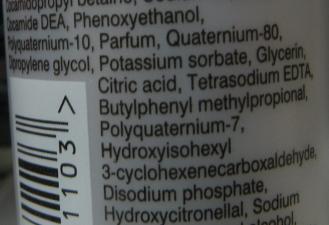
  5. Here is an example of consumer driven information and content hurting a business. There is this app called Think Dirty that will scan any barcode of your beauty and cosmetic products. Then it will list the ingredients of the product and rate it on a scale of 1-10 in terms of toxicity. Here is a screenshot of a product I use as a personal test to the app. First of all, L’oreal is a pretty solid company, that doesn't put out toxic products. Newsflash: this is why they are still in business. Secondly, what I found was completely wrong. They were listing cyclohexasiloxane as a toxic ingredient when in which they were doing something I call a classic google search gone wrong. Chemistry is its own language so someone researching a chemical is a loaded and dangerous in terms of science communication. classic google search gone wrong. Firstly, you have to be experience and knowledgeable about silicones because they are a large group of compounds. Depending on the formula and degree of polymerization, defines their characteristics. Secondly, this information is usually patent protected so we use general terms when it comes to ingredient labels. It takes chemists and the talent culture of that company to address the concerns or mismanagement of info. All of this leaves a digital footprint that is then available to the public who are heavily dependent on google search results. Is that how you want your business to be branded? How about your research in connection to? This also presents a nightmare to social media managers everywhere who do not have a scientific background. They are forced to research things they do not know or are trained to explain on a level that control consumer content. Can anyone guess what most do? Thats right- google search. 
  6. So in order to change chemophobia in relation to business and the chemical industry-chemists (or their own talent culture) need to address consumer driven content, create their own and collaborate with similar brands across social media. Networking with others in their industry, professional organizations relating to chemicals and educating consumers through this engagement will help shape the future of the industry and our own professional brand as chemists. Business need take advantage of chemistry having the history of being able to be self-defined. 
  7. My last job interview was at an R&D Fracking fluid company. My experience was much like that first headline I showed you. Before the interview I did some research on the company and found out that the vice president of this company created a biobased terpene mixture solvent-a citrus based, biodegradable, sustainable and renewable product. I did rigorous petroleum organic geochemistry research for two years and the solvents (xylene and toluene) were used in mass quantities, not to mention, long term exposure taking a toll on my health . I was excited to tour the plant and meet the research team. Why is it---we don’t see or know more chemical innovations like these? Let’s help re-brand the business, the chemist and the next chemical revolution.Thank you
Panel Presentation

Common Chemistry makes a Curious Crowd.


Chemistry brings forth the most fundamental science, a subject dealing with intricate and most complex states of matter. All states of matter extend to the natural world including ourselves, making chemistry a science of personal interest. The extent of our knowledge depends on man's relationship and function towards its chaotic criteria.  Relationships in theory, method and practice negotiate how all scientific concerns will be addressed

Much like particles relying heavily on physics to exist, our natural world selves rely upon human connections to ensure our own existence. Our natural curiosity compels us to understand the world and the people in it.

Back in October 2013, I attended ConfluenceCon for its first year in Oklahoma. Confluence is basically a curation of actual people whose digital content and influence play a contributing role to the online community as well as offline.

It was my goal to add science communication to that list.


Meeting twitter people in the flesh is weird but it was worth meeting Marissa Mohi and David Cameron. Also, it is the first place I learned of OU Janux because Adam Croom presented a talk titled How To Become An Authority On Anything. 


This is how I learned about Janux and Croom's vision for digital learning that did not include the traditional student. The ironic thing is I heard about Janux's Chemistry of Beer through twitter and the hashtag #ChemBeerOU a few months later. 


It was a chemistry class unlike any other. Mostly because it was on a platform unlike any other. It was built for digital content, but content that can be pieced apart, edited, corrected, analyzed, discussed, shared as well as elaborated and expanded upon. I think the interaction was so intense and diverse among the 9,000 students enrolled--was traditional classmates transformed into commercial brew-masters, home-brewers, undergrad chemists, graduate degree chemists, PhD chemists and any intermediate learner with regard to beer artistry. Let me show you.

ORGANIC CHEM TIPS/TRICKS


REAL TALK FROM A PROTEIN CHEMIST ON PROTEINS


OPEN ACCESS GETS REAL TOO


HASHTAG LEARNING


I look forward to engaging online through chemistry content in the future. Hopefully science communication can be shared through online learning platforms. Honestly, if you give me any reliable hashtag, I will tweet it. My twitter habit along with endless content is what accidentally landed me in the OUdaily


Memory of Mother Marie Curie

A FACE OF "TERRIBLE PATIENCE"

Marie Curie's documented appearance throughout history is easily recognizable among those in the Age of Scientists. Her face reflects what her daughter Eve called the "terrible patience" -- she displayed during her tedious radium experiments.

Eve, the one non-scientist in the family wrote the celebrated biography of her mother, and in it described her manifold talents as "a physicist, a chemist, a specialized worker, an engineer and a laboring man all at once."


RADIOACTIVITY AND THE FAMILY THAT TRACKED IT DOWN

Marie was given free use of a store-room, sweating with damp, on the ground floor of the School of Physics. It is where unused equipment and lumber were put away. Deprived of an adequate electrical installation and of everything that forms material for the beginning of scientific research, she kept her patience, sought and found means of making her apparatus work in this hole.

Fascinated by radioactivity, her method remained intense and the same, even as her curiosity shifted among the most diverse forms of matter.
"You know, Bronya, the radiation that I couldn't explain comes from a new chemical element. The element is there and I've got to find it. We are sure! The physicists we have spoken to believe we have made an error in experiment and advise us to be careful. But I am convinced I am not mistaken."

May/June 1898-- a valuable force doubled and an 8 year collaboration ensued up until it was destroyed by a fatal accident. They signed all of their notebooks and scientific publications "We found" and "We observed" -implying equal credit be due.

ACCLAIM FROM AMERICA
Marie and Irene Curie flank President Warren G. Harding during a 1921 ceremony where he presented them with a gram of radium for their experiments.Money to buy the radium-- then worth $100 a gram-- had been raised in a campaign by Mrs William Brown Meloney, a NY newspaper editor. Funds left over provided Mme. Curie with a life income.

SECOND GENERATION HONORS
Irene and Frederic Joliot-Curie receive the 1935 Noble Prize for chemistry from the king of sweden, Gustav V, for their work in producing radioactive elements. Irene was later awarded the French Legion of Honor, in 1939. Because Pierre and Marie Curie had no male heir, their son-in-law added the name Curie to his own so that its fame would not die out.

References

1. Lapp, Ralph E. (Ralph Eugene) & Time-Life Books (1974). Matter. Time-Life Books, New York
2. Shapley, Harlow (1963). A treasury of science (5th rev. ed). Harper & Row, New York

A Chemist's Fear of the Dark: Dedicated to Chemophobia.

Upon writing a recent manuscript for the most recent chemophobia discussion, I found two essays. Despite the time I spent on my most recent research, this essay contributes to the conversation in so many ways. I wrote this in undergrad for a history of chemistry class, four years ago. The hopes of an aspiring chemist concerning chemophobia. I will say my thoughts back then have managed to morph into something else. A new meaning. 

First, I would recommend reading these articles first so you are familiar with my topic and references:

  1. Hoffman, Roald. Chemistry, Democracy, and a Response to the Environment, Chemical and Engineering News, 68(17), 25-29 (April 23, 1990).
  2. Kovac,Jeffrey. A Weird Insult from Norway: Linus Pauling, the Bomb, and the Ethics ofFaculty Involvement in Public Affairs, Proceedings of Conference on Values in Higher Education Stewardshipand Opportunism: The Moral Roots of Accountability. April 16-18, 1998.
  3.  Bard,Allen J. Politics, Culture, and Science: The Golden Age Revisited, Chemical and Engineering News, Volume 80(14), pp. 44-47.


Brandi VanAlphen
Nature and Dev. Of Chemistry
November 24, 2010


       Chemophobia is a term, more frequently found, when reading about chemistry and society. The ordinary sense of the meaning corresponds to the fear of chemicals. Historically, it is still uncertain the exact translation of chemistry from alchemy but it is certain to be a product of change, subject to evolution. For intended purposes, it can be generally used to describe fear of the unknown. People described as having chemophobia assume all chemicals are undependable and harmful. Then again, those with a familiar knowledge of chemistry argue that this is an incorrect generalization. For chemistry to continue to prosper for/in society, the chemistry professionals and society must work together to achieve mutual respect and trust. There are several issues regarding why there are gaps. First, most people remember large scale tragedies (Bhopal, Chernobyl etc.) compared to the daily requirements that they now take advantage of (pharmaceuticals, house-hold products etc.). The chemical revolution has surpassed our chemical knowledge. Chemophobia is more widespread than ever now that companies are pushing “natural” and “organic” products. The media contributes to this phenomenon because its function is not regulated by scientific ethics. The only solution to conquering these fears would be education reform. This new knowledge and understanding would support more research  by which chemists can demonstrate their intelligent craft and uphold the tradition as benefactors of humankind. That image reflects the absence of chemophobia.


      Education about chemistry does not just extend to the public and our children, but it must be properly managed to academia, industry and the governing bodies that usher them both into power. Roald Hoffman expressed his concern about this in his 1999 Priest Medal Address titled Chemistry, Democracy, and a Response to the Environment. In the C&EN article, Hoffman describes the importance of democracy in our government along with the historical accounts of the chemical industry. From this, individuals maintained liberties for the greater good of society and trade emerged. Over time, individuals and chemicals became an integrated part of society allowing human error and then the daunting environmental concerns. Environmental concerns bred negative attitudes and portray chemists as “the producers of the unnatural, collectively labeled as polluters” and “we [chemists] are surrounded by chemophobia, by unreasonable, irrational fear of what we do[1].” In response to these attitudes of fear, scientists react instinctively with what they know- the science they are taught. Hoffman maintains that “to take the view that even if we do not know what someone else knows and that we should trust that someone else to ensure our health is naïve, unscientific and undemocratic[1].” People have an invested interest in their health so they should be somewhat responsible for knowing what they digest or at least have the tools available to them to find out. Scientists have an equal investment in their science and health to not distribute harmful chemicals in food. Hoffman goes on to explain proper responses of chemists to the environment as well as risk assessments. The etiquette and compassion shown towards society should alleviate some fears but his words also caution against reliance upon a single authority. Hoffman’s solution to this is to construct chemistry courses that are aimed at everyone covering a wide-range of issues. These courses need to stress the importance of knowing what goes on in the world so they generate informed citizens. Hoffman believes democracy was built on education and it is everyone’s commitment and responsibility to be properly informed about chemistry and how it relates to us.

One of the responsibilities as a scientist is to pass on safety information to the public. This arrangement is not as simple as it is stated. Complexities can occur that limits a scientist’s public role. A famous example of that is Linus Pauling, 1962 Nobel Peace Prize winner. Pauling believed that he should have an influence in public affairs and readily pursued that right when speaking publicly about the dangers of nuclear testing. His opinion wasn't welcomed because it was against the best interests of Americans at the time. His opinion was so unpopular that when he received the Nobel Peace Prize, LIFE Magazine called the award “an extraordinary insult to America[2].” In an article by Jeffrey Kovac titled A Weird Insult from Norway: Linus Pauling, the Bomb, and the Ethics of Faculty Involvement in Public Affairs, Kovac describes how Pauling’s name in science grew into a notorious one in politics throughout the length of his career. Despite the fact that Pauling was correct in his scientific findings, Kovac finds it troubling that he abandoned his roles and responsibilities as a faculty member in a research university. Perhaps this is because most credible scientists are found working at universities on research that contain empirical data. Pauling was taking to the media on a regular basis without sufficient evidence and was not considered a specialist in regards to nuclear physics. This is where education is important. Society will not accept opinions from a scientist who does not have proper education, peer support and the ability to perceive a risk for their best interests. Pauling was a great respected intelligent man, but Kovac suggests that Pauling faced a great ethical dilemma between education and the preservation of world peace. Kovac portrays Pauling as a citizen activist who left a dent in the Caltech chemical community.by mishandling his prestige. Perhaps they thought he could have  geared his actions more towards education instead of unpopular topics[2]. Educating the public about a specific topic must be an expert collaboration directly related to the topic and field to ensure the interests of a democratic society. 

For scientists to continue to educate themselves and the public, we need professors who are constantly skilled in research and analysis. They end up being important public intellectuals and innovators in technology. Chemistry in academia and industry has a strong history relying on each other’s success, despite public hostility towards one or the other.  Research and analysis is expensive and relies heavily on federal funding. Alan J Bard visited this topic in his 2002 Priestley Medal Address. Bard believes that we need to nourish the spirit of the Golden Age of American science in order to preserve our economy and society[3]. Funding in the beginning of the Golden Age is described by Bard as the “generous support of fundamental research [leading] to the development of a body of scientists and science that became the envy of the world[3].” Not only does education serve an important foundation for science but research cultivates new ideas and discoveries that benefit society. Bard goes on to establish society is playing it safe when taking risks and this affects research as well. Bard says, “I think fundamental research can be justified based on a long history showing that it pays off in societal benefits in the long run and it should be defended on that basis alone[3].” Not only is revolutionizing education an important factor for preserving chemistry but continuing that education through research as well. Research dictates policy and policy dictates our lives. If we don’t do it, someone else will. 

The majority without the knowledge of chemistry contain jobs that control policies affecting science. This is a huge concern. If the people in control do not value this information, it comes down directly on the scientists and educators. For example, since the turnover of the House of Representatives, it is a concern that “science research funding may be a target of a Republican plan to roll back government spending[4].” This affects research, scientists, education and the public. Without pushing knowledge of chemistry, the environment and society will suffer from these consequences. If funds are unavailable, chemists cannot explore safety of chemicals, tragedies will occur and we will all still be left in the dark.


References
1. Hoffman, Roald. Chemistry, Democracy, and a Response to the Environment, Chemical and Engineering News, 68(17), 25-29 (April 23, 1990). 
2. Kovac, Jeffrey. A Weird Insult from Norway: Linus Pauling, the Bomb, and the Ethics of Faculty Involvement in Public Affairs, Proceedings of Conference on Values in Higher Education Stewardship and Opportunism: The Moral Roots of Accountability. April 16-18, 1998.
3. Bard, Allen J. Politics, Culture, and Science: The Golden Age Revisited, Chemical and Engineering News, Volume 80 (14), pp. 44-47.
4. Hess, G., Hogue, C., Johnson, J. and Pittman, D. A Change in the House: Republican takeover of House of Representatives signals new science policies, Chemical and Engineering News, Volume 88 (47), pp. 23-25.


Girl on Fire: Feeding The Hunger

Last night I watched the new Hunger Game movie and although I have not read the books, I find dystopian structures fascinating. Maybe because it's a literary tool that can be used for connecting me and others on how we experience and perceive what our "socioeconomic normal" is. Even Forbes recently wrote an article on how the series keeps pace to the  "Brutal Horrors of Thuggish Government."


The content that compelled me last night wasn't the classic dystopian novel story (although impressive) but the imagery I find personal.  In 2005, I got my first big piece tattoo inspired by my first boss at the staffing agency I worked at. He had this term of endearment for me when my frustrations led me down productive paths- he would call me his "little fireball" or would say "she is a fiery one" when expressing caution about my personality coexisting with my work ethic. I can say it was a positive reinforcement when learning to balance my temper and productivity.


I came across Amy Brown's fire dancer and I knew I wanted that.


Jason Todd (Guitar) and Brent Smith (Vocals): Shinedown


The day I got this tattoo makes for an interesting story as well. I went to a Shinedown concert directly after the appointment, ended up passing out from dehydration and scored two of the band member's autograph on tank top I was wearing while my vitals were being monitored. 


Firedancer Tattoo on left thigh


Moral of that story is: Don't go into a mosh pit after having a large lengthy tattoo session. I still wouldn't do anything different except maybe apologies to the maid of the hotel I was staying at. That tattoo bled all over the sheets as if someone was murdered in there. Also, somewhat a regretful acknowledgement to the civilian clothed paramedic. I get quite feisty when a stranger puts their hands on me without identifying themselves in a medical emergency. I don't care how weak my vital signs are, I will fight you. It's one of those "I don't know you" type thing when the fight or flight kicks in.


There is something to be said about a girl on fire. The moral fiber and the imagery it beholds to a girl coming into her own. It's actually one of the few positive analogies we have for strong women today. Not only strong, but different. Not only different, but good. Suzanne Collins, as an author, embraced that connotation with a lasting impression.


As a chemist, I've seen what fire can do when manipulated in a reaction. I've also seen what it can do when other variables aren't attended to (by my tech, not me). I've put out a couple when I worked at the environment lab due to hexane, a hot plate and a fume hood that wasn't pulling at it's minimum standard strength. 


I miss lab. I miss being that girl. Perhaps, I can find good use for her somewhere. Right now, I will just have to keep her at my side, where she has always been.


Holiday Chemistry Cheer

The Holiday Season is Here.


Have a Chemist in your life? Consider some of these awesome things I've come across through-out the year.


17. Mad Science Knee Highs by Sock Dreams


Knee High Socks: $10

16. Periodic Table Leggings by 1991Inc

Bc chemistry is hot and so are leggings: $49

15. Marie Curie Quote, Carbon Nanotube Vinyl Wall Decal on Etsy

"Nothing in life is to be feared, it is only to be understood. Now is the time to understand more, so that we may fear less." $55

14. Molecule Graphics for your mixer on Etsy

If your kitchen is your home lab: $30

13. Test Tube Tea Infuser by ThinkGeek

Mad Tube Tea Party: $11.99

Laughing So Hard, I Fell Off My Long Chained Hydrocarbons.

It's National Chemistry Week! Which always brings reflection on how I got here. Science communication taps the most primal instincts, as in "When did this pivotal exchange occur in my life?' This is especially important for those who don't have access to the most basic resources. Chemistry is everywhere, it's that path of the dreamer that essentially connects them for life. For me, it provided a more therapeutic role in my early age development, but that's another discussion  unique to low income learners.

GHETTO IUPAC: I use to read bathroom content labels as a kid.


Recently I have started collecting old science texts/literature from thrift/antique shops and all rummage trade shows. I was curious to compare science communication then versus now. What I found most compelling is the public audience pieces haven't changed much. What has changed is the space on which it is exchanged.

A Chemist Gonna Create...

As you know, I traveled to Chicago recently. Had a great time, saw a couple friends, including a nutritional chemist whom I graduated with. He showed me around and even took time off work to do this. This past week, I recently received a random text from him. Normally, it wouldn't be something I post but it helped me during a time I started to doubt myself. It read as such:

"I think of how courageous you are and strong."
"It puts me to shame sometimes haha."

Let Me EXPLAIN TO YOU How A Chemist Looks For Work.


College Football is in high gear, along with my job search. I am wrapping 2013 in this fashion because I promised myself and certain others I would take a year off and then continue my career. While I can shout "Boomer" within a 100 mile radius and receive a quick reply of "Sooner!" --my resume is not receiving the same passionate response. Ironically, no response means the opposite of sooner, which is later, much much later.

However, I have come across very very few chemistry jobs in a 50 mile radius, and some have been un-impressive and down-right confusing. I am on the brink of an identity crisis because my skills land on a spectrum of job titles that make no sense to me.

According to Bureau of Labor Statistics & Office of Occupational Statistics and Employment Projections, my education/experience classify me as a Chemist in their Occupational Outlook Handbook. Funny, I thought I earned that title too until recent employment opportunities told me otherwise. When I felt downgraded by someone less qualified than me and insulted at their employment recruiting skills (yes I can say that, given my experience in contract labor staffing)-- I wanted to address key problems for local hiring companies and job applicants. I will also break down a job recruitment post because I can't take this anymore.